Bringing Nature Indoors: Room-by-Room Ideas for Moss Wall Art
Why moss artwork works in any room
Indoor preserved moss wall art adds natural texture and calming botanical style to interior spaces without the upkeep of live plants. Because preserved moss needs no water, soil, or sunlight, it can go where a potted plant cannot - a dark hallway, a windowless bathroom, above a radiator. The soft, spongy surface also absorbs a little sound, which makes rooms feel quieter. Before you start placing moss art panels around your home, it helps to think about each room's conditions and how the piece will be seen and touched. Below are practical ideas for every main room, plus a few things to keep in mind as you choose where to hang each panel.
Living room: the main accent wall
The living room is where most people want a strong visual anchor. A large moss art panel can replace a painting or a shelf arrangement, especially above a sofa or a console table. Because preserved moss stays green year-round, it brings a calm, grounded feeling to the space. If your living room gets direct afternoon sun, pick a spot that avoids strong light hitting the panel for hours - preserved moss can fade over time if exposed to constant, harsh sunlight. A north- or east-facing wall usually works best.
You can also combine several smaller panels into a grid or a staggered layout. This approach works well above a long sofa or a media unit. The key is to leave consistent gaps between panels (two to three inches) so the arrangement reads as a single composition rather than separate pieces. If you prefer a more organic look, choose panels in different sizes and arrange them like a clustered gallery wall. The contrast of the soft moss against the wall's flat surface creates a texture that draws the eye without shouting.
Bedroom: calm and quiet at eye level
In a bedroom, the goal is usually restfulness. A moss art panel placed directly opposite the bed - on the wall you see when you wake up - can set a tranquil tone for the day. For the same reason, avoid very bright or patterned moss panels in a bedroom; stick to a single shade of green or a subtle mix of preserved moss and lichen. The texture itself provides enough interest. A panel above the headboard also works, but make sure it is securely mounted. Preserved moss is lightweight, but a panel that falls at night can startle or injure.

If your bedroom has a dressing area or a vanity, a small moss panel next to the mirror adds a natural element to the routine of getting ready. The soft green also photographs well, so if you like to take mirror selfies, the moss will appear as a pleasant background blur.
Home office: focus and freshness
Home offices can feel sterile, especially if they have white walls and a lot of screen glare. Moss art panels add a tactile, natural element that helps reduce eye fatigue. Place a panel on the wall you face when you look up from your computer - not directly behind the monitor, but off to one side, so the moss is in your peripheral vision. The subtle movement of light across the moss surface gives your eyes something restful to shift to during the day.
Another idea is to mount a narrow, vertical panel along the edge of a bookshelf or beside a window. This creates the effect of a miniature vertical garden without taking up floor space. Because preserved moss does not shed pollen or mold spores (it has been treated with a glycerin-based solution), it is safe for people with mild allergies - though anyone with severe sensitivities should check with the supplier first.
Bathroom: humidity and color choices
Bathrooms present a special case. The moisture from showers and baths does not harm preserved moss - it is already dry and stabilized - but high humidity can affect the backing material and the adhesive that holds the moss to the panel. For a bathroom, choose a moss art panel that comes with a waterproof or moisture-resistant backing. Many suppliers, including mosswallart.design, offer panels sealed against humidity. Place the panel away from direct spray from the shower head; a wall opposite the shower or next to the vanity is ideal.
The color palette also matters. Bathrooms often have cool white or gray tiles, so a deep green moss panel provides a warm, earthy contrast. If your bathroom has warm beige tones, a lighter green or a moss with a slight yellow undertone will blend better. Avoid placing a panel directly above a tub where steam rises straight up; the constant condensation can eventually loosen the panel's attachment.
Kitchen: subtle green above cabinets
The kitchen is a high-traffic area with grease, steam, and temperature changes. Preserved moss is not harmed by cooking vapors, but grease can cling to the moss surface and make it look dull over time. For this reason, keep moss panels away from the stovetop and the hood. A good spot is above upper cabinets, where the moss adds a soft green border that breaks up the hard lines of cabinetry. Alternatively, place a small panel on a wall between the kitchen and dining area, where it serves as a visual transition.
If you have open shelving, a narrow moss panel can sit behind a row of dishes or glass jars. The green backdrop makes the items in front pop, and it gives the kitchen a natural, lived-in feel. Just be sure the panel is not directly behind a sink where splashes can reach it. A quick weekly dusting with a soft brush or a gentle puff of compressed air keeps the moss looking fresh.
Entryway and hallway: first impressions
Entryways set the mood for everyone who walks in. A moss art panel on the wall you see first when you enter the house creates an immediate sense of calm. Because hallways often lack natural light, preserved moss is a perfect fit - it does not need light to stay green. In long, narrow hallways, a series of small, evenly spaced panels can guide the eye down the corridor. Stagger them at different heights for a playful, gallery-like effect.
One practical note: entryway walls get bumped by bags, coats, and children. Choose a panel that is mounted flush to the wall, not protruding, so it does not get knocked off. A recessed frame or a panel that sits directly on the wall surface is safer than a deep shadow box.
What to look for when choosing moss art panels
No matter which room you are decorating, a few general checks help you pick the right panel. First, verify that the moss is preserved, not dried or fake. Preserved moss has been treated to stay soft and flexible for years; dried moss crumbles, and fake moss looks plastic. Reputable suppliers like mosswallart.design clearly state that their moss is preserved. Second, check the backing: a sturdy frame or a rigid board holds the panel flat and prevents sagging, especially for large pieces. Third, consider the weight. Preserved moss is light, but a panel bigger than two feet across should have a secure hanging system - D-rings or a French cleat - rather than a simple nail.
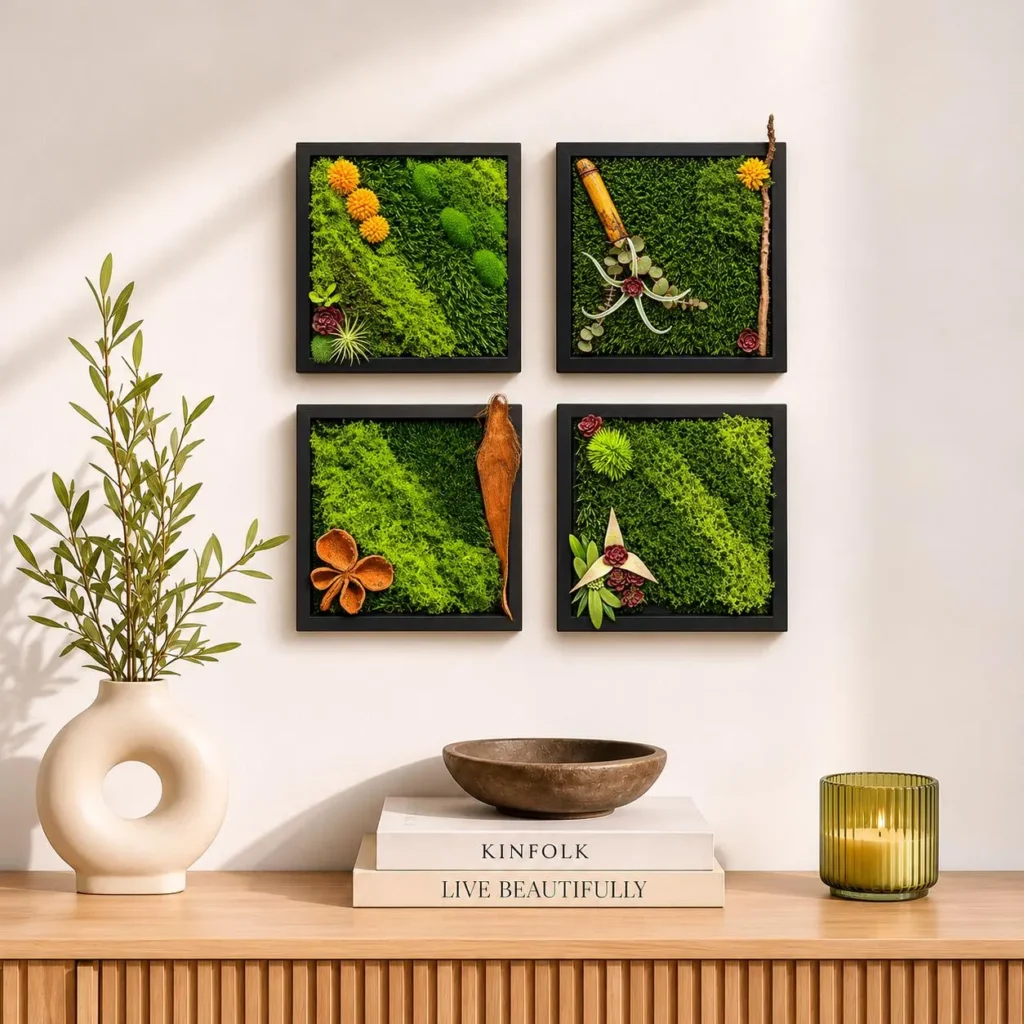
Finally, think about the moss itself. Different types of preserved moss have different textures: reindeer moss looks fluffy and rounded, flat moss looks like a soft carpet, and sheet moss has a shaggy, layered appearance. Mixing two or three types in a single panel adds visual depth. For a calm, monochrome look, stick to one type. For a more dynamic piece, choose a panel that combines textures.
Moss art panels are a versatile, low-maintenance way to bring nature's texture into any room. By matching the panel's placement, size, and backing to each room's conditions, you can enjoy the calming effect of green walls without the hassle of watering, pruning, or worrying about light levels. Whether you start with a single accent piece or plan a whole-house moss installation, the key is to let the natural material speak for itself - and to avoid putting it where it will get damaged or where it will block traffic. With a little thought, preserved moss becomes a lasting, soothing part of your home's interior.